Quick summary
Blue Teaming training at Best Cybersecurity Training in Hyderabad is a intermediate classroom course in Ameerpet, Hyderabad, in our Defensive Security track. It covers 8 modules — defensive strategy, endpoint hardening, identity defence, logging architecture and more — with hands-on labs using tools such as Sysmon, Windows Event Forwarding, Elastic / Splunk. It suits sOC analysts moving into detection engineering.
What is the Blue Teaming course?
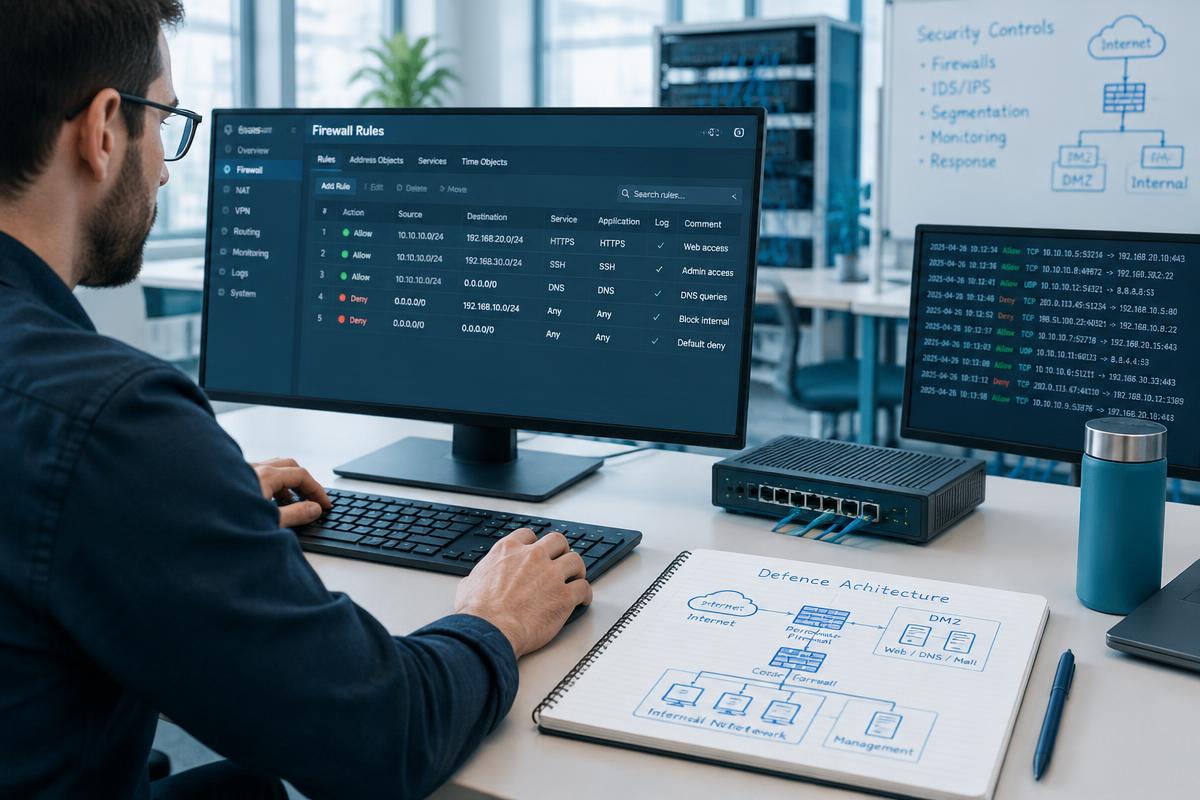
Blue teaming is the engineering side of defence: hardening systems, building telemetry, writing detections and validating that all of it works against actual attacks.
The course is built around a cycle — attack technique is executed in the lab, you observe what telemetry it produced, you build a detection, then you re-run the attack to verify the detection fires.
Coverage spans endpoint, identity, network and cloud, with MITRE ATT&CK used to track where defensive coverage genuinely exists and where it only appears to.
Who should learn this?
- SOC analysts moving into detection engineering
- System and network administrators with security duties
- Security engineers building defensive capability
- Teams preparing for purple team exercises
Prerequisites
- Windows and Linux administration experience
- Networking fundamentals
- SOC or monitoring exposure recommended
What you will learn
Blue Teaming curriculum
M01
Defensive strategy
- Defence in depth
- Attack surface reduction
- Assume breach thinking
- Defensive prioritisation
M02
Endpoint hardening
- Windows security baselines
- Application control concepts
- Linux hardening
- Patch and configuration discipline
M03
Identity defence
- Active Directory hardening
- Privileged access management
- MFA and conditional access
- Detecting credential attacks
M04
Logging architecture
- Choosing log sources
- Sysmon configuration
- Centralised collection
- Retention and cost trade-offs
M05
Detection engineering
- Detection as code
- Sigma rules
- Testing and tuning
- False positive management
M06
Network defence
- Segmentation enforcement
- Egress control
- IDS tuning
- DNS and proxy controls
M07
Attack simulation
- Atomic Red Team
- Adversary emulation plans
- Coverage validation
- Gap remediation
M08
Purple teaming
- Exercise design
- Joint working with red teams
- Measuring improvement
- Reporting to leadership
Practical training
Each module follows the same loop: execute the attack, inspect telemetry, build a detection, re-run and verify. Nothing is accepted as working until it has been tested.
Tools and technologies
- Sysmon
- Windows Event Forwarding
- Elastic / Splunk
- Wazuh
- Atomic Red Team
- Sigma
- MITRE ATT&CK Navigator
- Velociraptor
Labs and projects
- Deploy a tuned Sysmon configuration and verify what it captures
- Harden a lab Active Directory and re-test known attack paths
- Write detections for five ATT&CK techniques and validate each
- Run a purple team exercise and produce a coverage improvement report
Learning outcomes
- Harden environments against the techniques attackers actually use
- Build telemetry that supports investigation rather than storage
- Write detections that are tested, not assumed
- Report defensive coverage honestly to leadership
Career relevance
Roles where these skills are directly used:
- Detection engineer
- Security engineer
- SOC analyst L2/L3
- Security operations lead
Blue Teaming training — FAQs
How is this different from the SOC course?
SOC teaches you to work the alert queue. Blue team teaches you to build and improve the systems that generate it.
Do I need offensive skills?
Some. You run attack techniques to validate detections, and the course provides those techniques with the context needed to use them safely.
Is ATT&CK coverage measurement covered?
Yes, including the common failure of claiming coverage for techniques that were never tested.
Is this suitable for sysadmins?
Very. Administrators already hold the access and system knowledge; this course adds the defensive engineering mindset.
Related cybersecurity courses

Incident Response
Decide well under pressure, then prove what you did.
View curriculum
Security Operations Center (SOC)
Work a real alert queue, not a slide deck about one.
View curriculum
Threat Hunting
Assume the alert never fired. Go and look.
View curriculum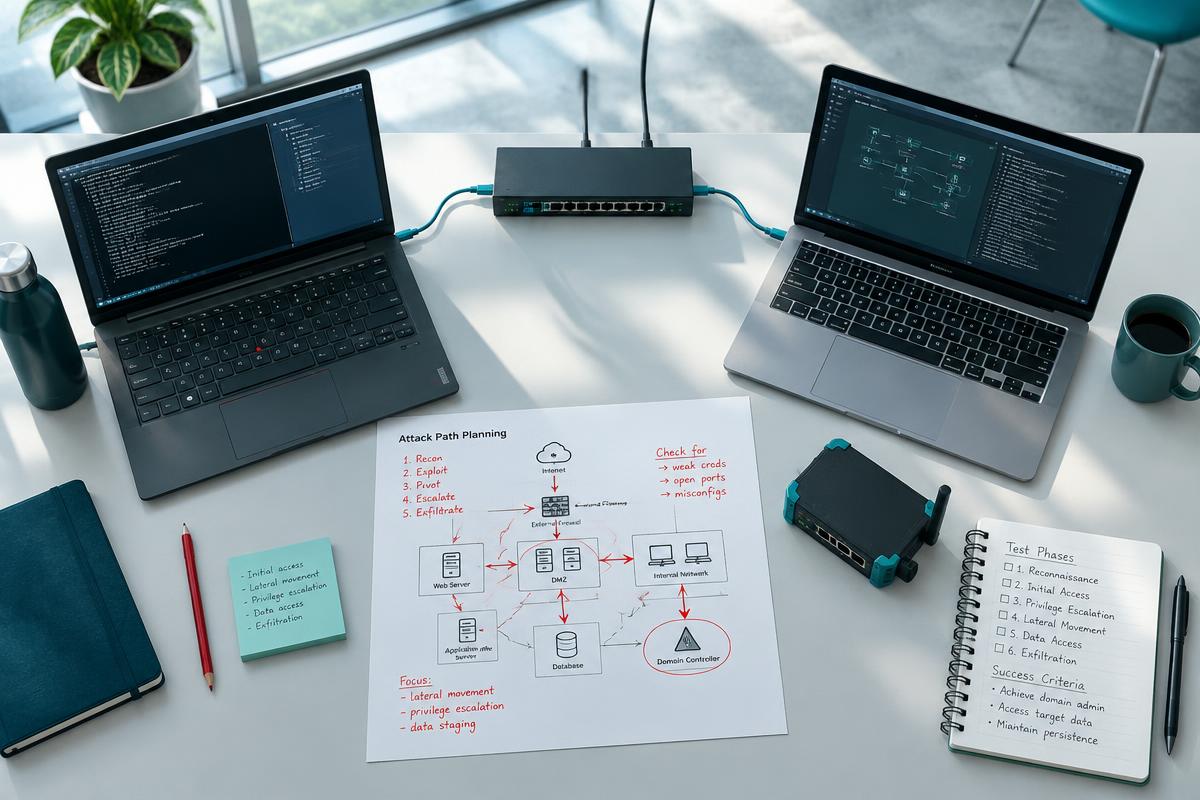
Red Teaming
Test whether the defenders can see you, not just whether a host is vulnerable.
View curriculum